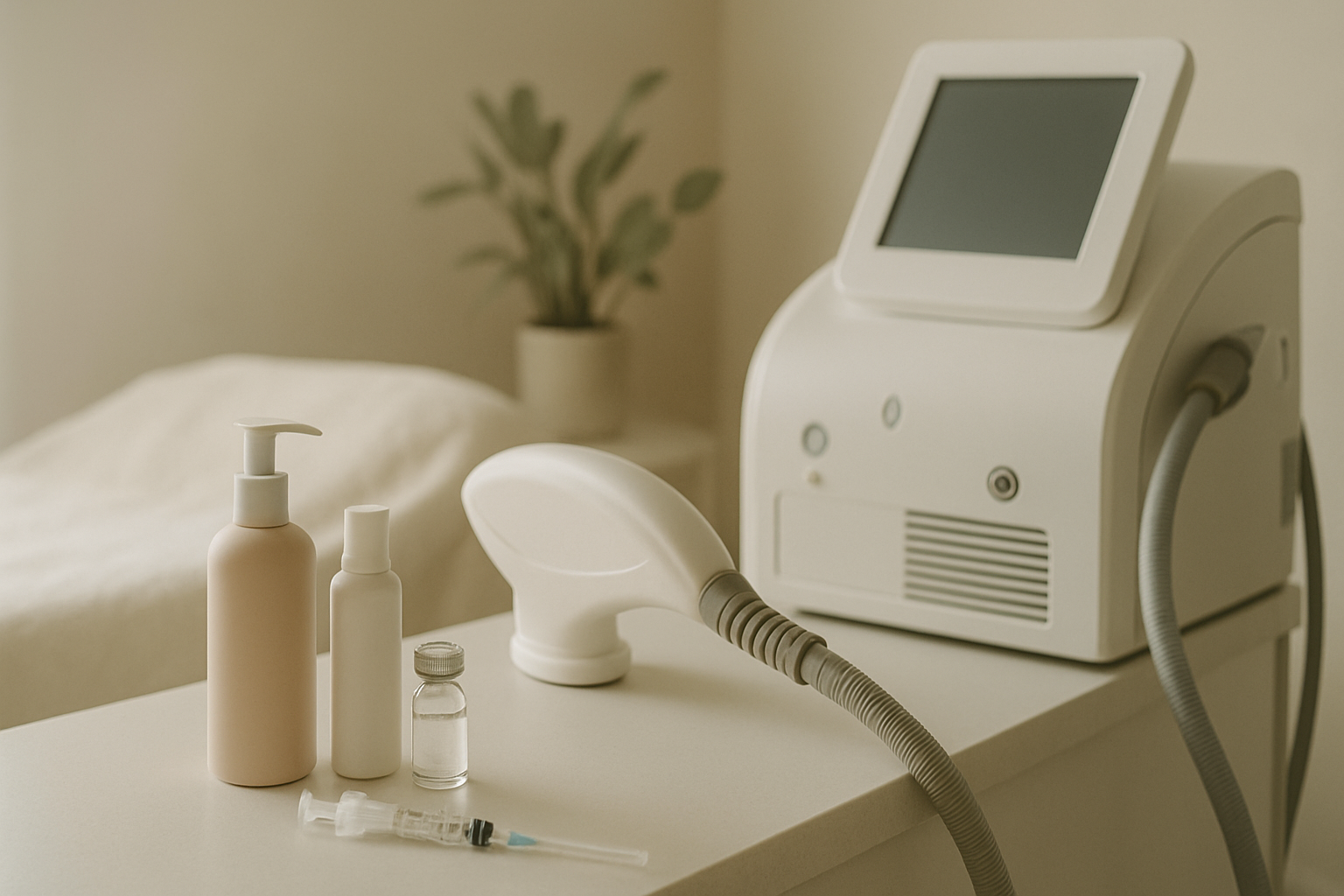
You've signed the lease, and now you're drowning in advice. Every rep wants to sell you a device. Every conference session says you need one more service to compete. Every Facebook group has a strong opinion about which laser is non-negotiable. The pressure to open with a full menu is real, and it's the fastest way to overspend, dilute your marketing, and confuse the patients you're trying to win.
The medspas that survive year one don't launch broad. They launch narrow, get good at a few things, and add services once demand tells them where to go. Here's how to think about that.
The full-menu launch is a financial trap
Consider the math. A single energy-based device — a decent laser or RF microneedling platform — runs $80,000 to $150,000, and that's before the service contract, consumables, and training. Stack three or four of those at open and you've committed a half-million dollars to equipment you don't yet know your market wants.
Now layer in the reality that a new practice averages far fewer than the treatments per week you need to service that debt. A device sitting idle four days a week isn't an asset — it's a lease payment eating your margin while you're still figuring out who your patients are. You bought capacity for a demand you haven't proven exists.
The narrow launch flips this. Injectables and a strong skincare/facial offering require a fraction of the capital, generate cash from week one, and let you learn your market before you make six-figure bets.
Start with the core: injectables and skin
For the vast majority of new medspas, the core is neurotoxin, dermal filler, and a repeatable skin service (medical-grade facials, chemical peels, or basic microneedling). There are concrete reasons this is the right foundation:
- Low capital, high margin. Your startup cost is product and a properly credentialed injector, not a financed machine. Margins on toxin and filler are strong from day one.
- Predictable demand. Botox and filler are the front door to aesthetics. They're what most first-time patients search for and book, which makes your marketing simpler and cheaper.
- They build the relationship. A toxin patient comes back every three to four months. That recurring visit is your best opportunity to introduce new services later — you're not paying to reacquire them.
- Fast feedback. A high volume of appointments teaches you who your patients are, what they ask for, and where the gaps are — data you'll use to decide what to add next.
Let demand pick your next service, not the rep
The single biggest advantage of starting small is that your patients will tell you what to buy next — if you're paying attention. When five people in a month ask whether you treat melasma, that's a signal. When you're turning away patients who want body contouring, that's a signal. When your facial schedule is booked three weeks out, that's a signal.
This only works if you're actually tracking it. Log the treatments patients ask about that you don't offer. Watch your rebooking rates and which services drive them. Note the demographics that keep showing up. By month six you'll have a real picture of your niche instead of a guess, and your next equipment purchase becomes a response to proven demand rather than a hopeful bet.
This is where clean data earns its keep. If your booking, patient records, and treatment history live in one place — the way VISTA keeps them — spotting these patterns is a report, not a weekend of digging through spreadsheets. Whatever system you use, make sure you can answer "what are patients asking for that we don't do?" without guessing.
A narrow menu markets better
New owners assume more services mean more patients. In practice, the opposite is true early on. A tight menu is far easier to market. "We're the neurotoxin and filler experts" is a message people understand and remember. "We do everything" is a message that says nothing and forces you to split a small ad budget across a dozen offerings, none of which get enough spend to work.
Focus also builds reputation faster. Ten flawless lip filler results on your Instagram will do more for you than a scattered feed showing one of everything. Become known for something specific, and referrals follow. Then you expand from a position of authority instead of anonymity.
Build your expansion on purpose
Once demand points you somewhere, add deliberately. Introduce one service at a time so you can train your team, dial in your protocols, and market it properly before moving to the next. When you do buy that first device, negotiate hard, understand the true cost per treatment including consumables, and know your break-even volume before you sign. Because you started with a profitable core, you're buying with cash flow and confidence, not desperation.
The practices that offer twelve services in year three usually got there by mastering three in year one. That sequence is the whole game.
Opening a medspa is overwhelming precisely because there's no limit to what you could do on day one. The discipline is in choosing what you won't do yet. Start with the core, get genuinely good at it, listen to what your patients keep asking for, and grow into your niche. You'll spend less, learn faster, and build a practice on demand you can actually see — instead of one you hoped would show up.